Friction reducers, guar systems, and the future of hybrid fluid designs
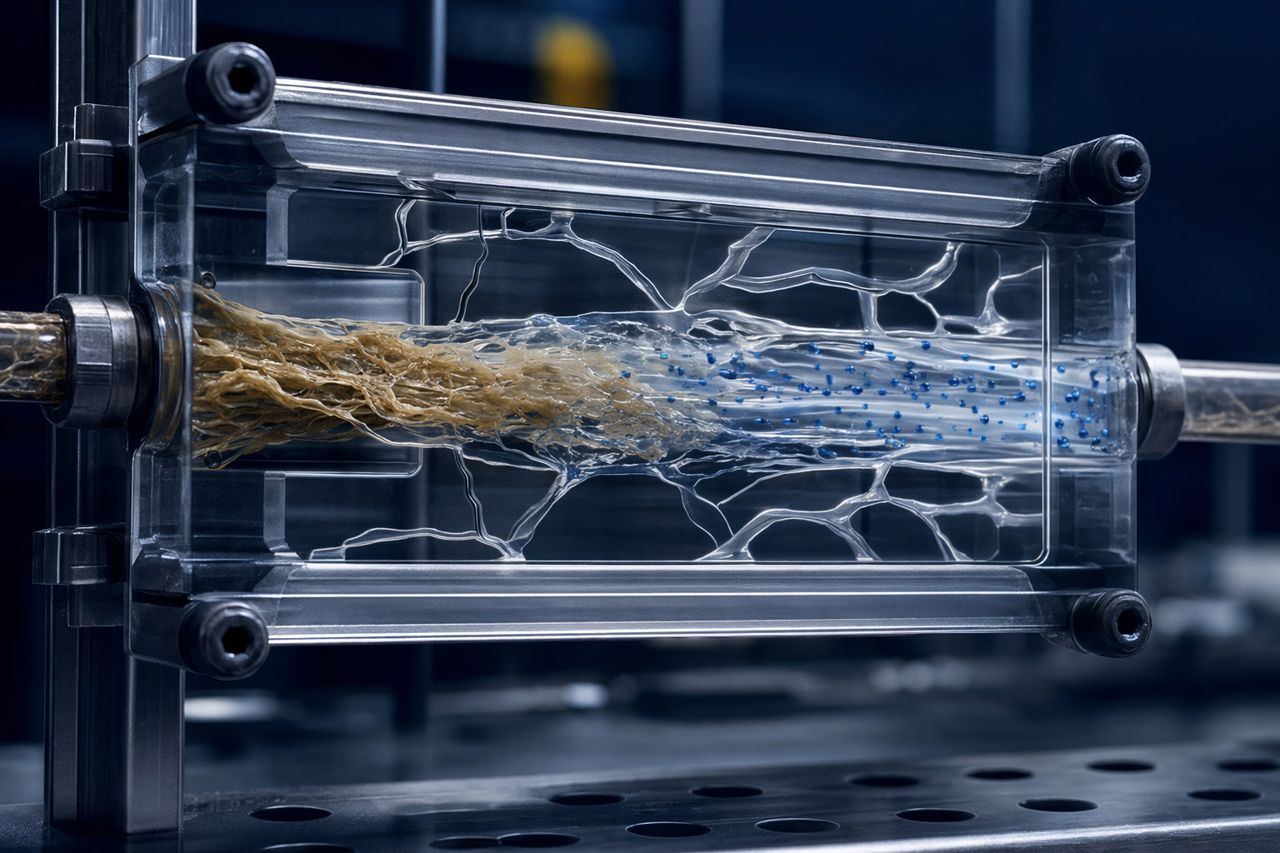
Hybrid fracturing-fluid design is becoming less about choosing one chemistry family and more about building a controlled operating window. Slickwater programs continue to value low friction, fast hydration, simple logistics, and high pump rates. Guar and guar-derivative systems continue to matter where viscosity, proppant transport, and fluid-loss behavior require more structure.
Between those two ends of the design spectrum sits a growing class of hybrid systems: friction reducers paired with lower guar loadings, linear gels modified for pumpability, and breaker packages tuned around cleanup timing rather than generic dosage habits.
For product managers at oilfield chemical suppliers, the commercial question is practical: can the formulation work across real water quality, field temperature, pH, salinity, polymer loading, and additive stacks without creating new inventory or compatibility problems?
FracTide Labs works as an enzyme breaker supplier for oilfield fluids with that formulation reality in mind.
Why hybrid designs are gaining attention
Hybrid fluids are being evaluated because many operators want more than one performance attribute from the same fluid family:
- Lower friction during high-rate pumping
- Improved proppant transport compared with straight slickwater
- Reduced polymer residue versus heavier gel systems
- More predictable cleanup after placement
- Better flexibility across stage design, water source, and basin conditions
- Simpler chemical programs where supply chains and field execution matter
The strongest hybrid programs are not chemistry mashups. They are engineered systems where polymer choice, hydration profile, friction reduction, crosslinking behavior, breaker timing, and production cleanup are considered together.
The breaker question product managers keep revisiting
Breaker chemistry is often discussed late in the development process, but it can determine whether a hybrid fluid is commercially fieldable. The breaker has to be strong enough to support cleanup, but controlled enough to avoid premature viscosity loss during surface handling, pumping, and placement.
For hybrid systems, that timing challenge becomes more nuanced. A formulation may include friction reducer, guar or modified guar, surfactants, clay control, biocide, scale-control chemistry, corrosion-control chemistry, oxygen scavengers, and oxidizing or reducing environments. A breaker package that looks clean in a narrow bench screen may behave differently when the full additive stack is assembled.
That is why enzyme breaker selection should be treated as a formulation decision, not a catalog substitution.
Where enzyme breakers can fit
Enzyme breakers are commonly evaluated where controlled polymer reduction, cleaner flowback behavior, and compatibility with specific guar-based systems are important. They can be particularly relevant in hybrid fluids where the goal is not simply to destroy viscosity as fast as possible, but to align viscosity reduction with placement, shut-in, and cleanup expectations.
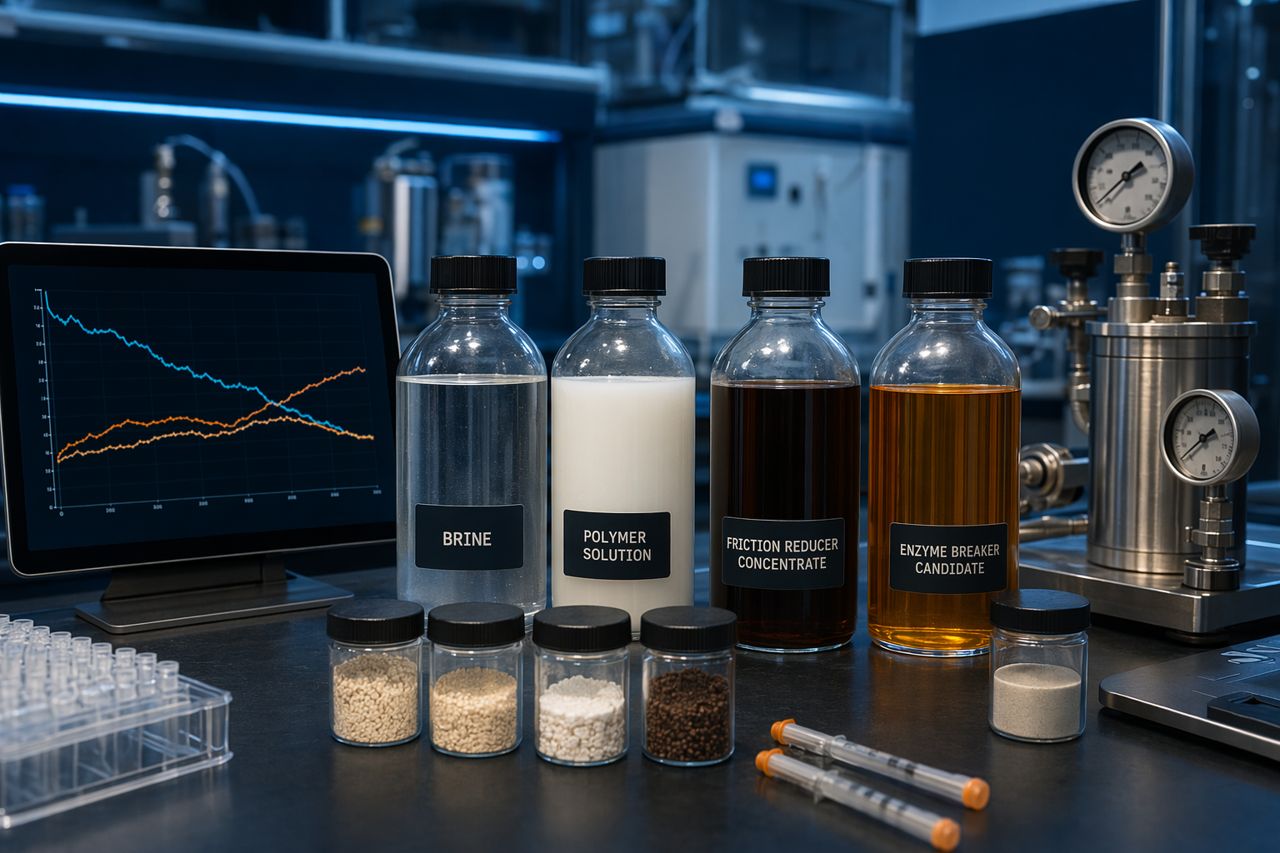
FracTide Labs helps oilfield chemical suppliers evaluate enzyme breaker options around questions such as:
- Which guar or guar-derivative system is being used?
- Is the fluid linear, lightly crosslinked, or part of a hybrid friction-reducer package?
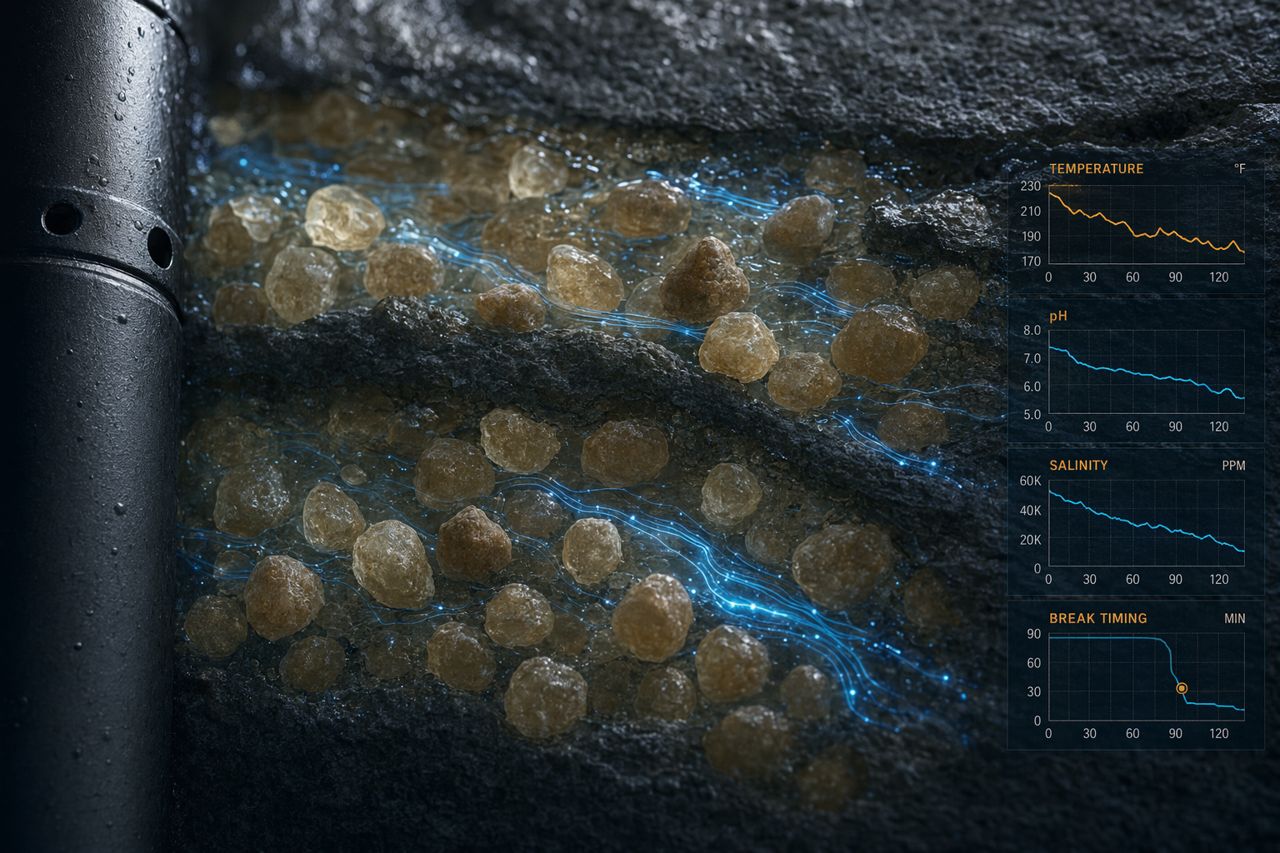
- What temperature, pH, and salinity conditions are expected during the job?
- What oxidizers, biocides, surfactants, and scale-control additives are present?
- Is the target a delayed break, staged break, or cleanup-focused break profile?
- What shelf-life, packaging, and field-mixing constraints must the supplier support?
The objective is controlled reduction of polymer structure under defined use conditions, not broad claims outside the tested operating window.
Compatibility is the difference between a sample and a sale
A product can perform in isolation and still fail as a commercial ingredient if it is difficult to formulate, difficult to ship, or difficult to explain to a field team. For B2B suppliers, enzyme breaker fit includes more than laboratory response.
Key fit factors include:
Formulation behavior
The breaker should be assessed with the actual polymer package, water chemistry, pH modifier, friction reducer, surfactant, biocide, and other additives likely to be used by customers. Compatibility notes should be written in terms that help formulators make decisions quickly.
Operating window
Temperature, pH, salinity, and exposure time should be framed as a usable window. Overly broad claims create risk. A defined window helps commercial teams position the product with more confidence.
Break timing
Hybrid fluids often require a balance between viscosity retention during placement and reduction after the fluid has done its job. Timing should be discussed relative to the application, not as a universal performance promise.
Logistics and supply reliability
Oilfield chemical suppliers need repeatable lots, practical lead times, packaging options, documentation, and continuity planning. Ingredient reliability matters as much as technical novelty.
Field validation path
A fieldable product needs a clear path from screening to customer trial. That may include formulation review, compatibility screening, pilot-batch support, customer-facing technical notes, and controlled field follow-up.
Friction reducers and guar are not opposing trends
The rise of high-efficiency friction reducers does not remove the need for guar systems. In many development programs, the more useful view is that friction reducers and guar occupy different roles in the fluid architecture.
Friction reducers help manage pumping pressure and rate efficiency. Guar and guar derivatives can provide viscosity, proppant-carrying structure, and fluid-loss behavior. Hybrid systems attempt to use both intelligently, often reducing total polymer load while preserving enough structure for the treatment design.
That shift places more importance on breaker precision. Less polymer does not automatically mean easier cleanup if the polymer is poorly matched, over-stabilized, or exposed to incompatible additives. Conversely, a well-matched breaker package can help suppliers position hybrid systems as controlled, practical, and field-ready.
What collaboration should look like
FracTide Labs is built for technical collaboration with oilfield chemical suppliers, polymer companies, frac-chem consultants, and laboratory teams developing commercial fluid systems.
A productive collaboration typically includes:
- Review of target fluid design and application conditions
- Identification of polymer type, additive stack, and constraints
- Selection of candidate enzyme breaker formats
- Compatibility and timing evaluation under relevant conditions
- Formulation feedback for product managers and technical sales teams
- Supply, packaging, documentation, and quote alignment for scale-up
The goal is to reduce uncertainty before a supplier commits to a product launch, customer trial, or basin-specific formulation package.
Commercial takeaways for hybrid-fluid programs
For product managers, the future of hybrid fracturing fluids will likely be shaped by practical formulation choices rather than a single breakthrough ingredient. The strongest programs will combine pumpability, transport, cleanup, cost position, and supply dependability.
When evaluating enzyme breakers for hybrid systems, focus on:
- Real additive-stack compatibility
- Defined operating windows
- Controlled break timing
- Clear positioning for field teams
- Reliable sourcing and documentation
- Evidence that supports customer discussions without overclaiming
Hybrid fluids are evolving because the field keeps asking for more precise performance. Breaker chemistry has to evolve with them.
Request a quote
If you are developing a friction-reducer, guar, or hybrid fracturing-fluid product and need an enzyme breaker supply partner, use the on-site request a quote form. Share the target fluid type, expected operating conditions, additive stack, packaging needs, and development timeline, and the FracTide Labs team will respond with a practical next step.